Why Google AdSense Rejects Websites? Top 10 Reasons in 2026 (Complete Guide)
Getting approved for Google AdSense is one of the biggest milestones for bloggers, startups, and small businesses that want to monetize their websites.
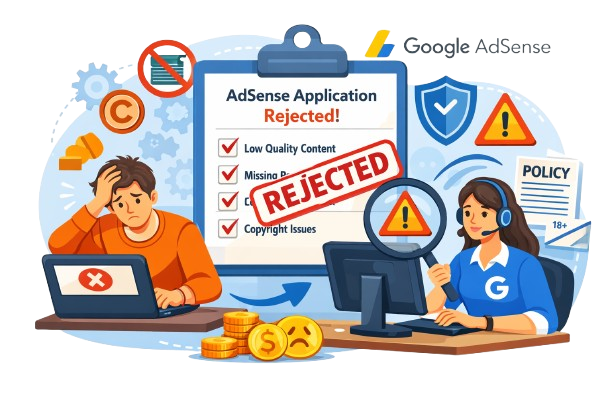
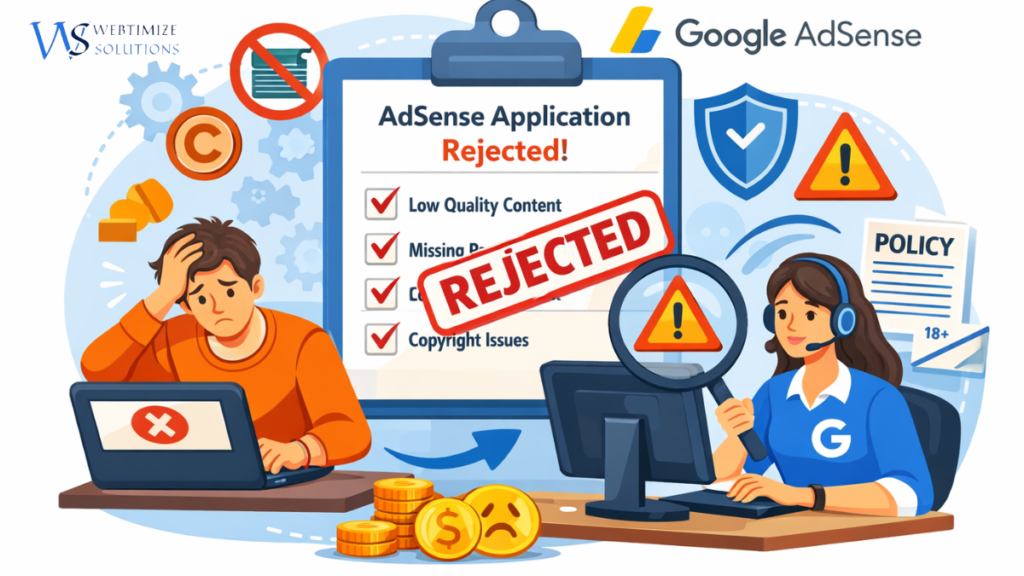
However, thousands of websites get rejected every day because they do not meet Google’s quality standards or policy guidelines.
If your AdSense application was rejected, don’t worry. In this guide, we will explain the top reasons why Google AdSense rejects websites and how you can fix these issues to improve your chances of approval.

What is Google AdSense?
Google AdSense is an advertising program that allows website owners to earn money by displaying ads on their website pages.
When visitors view or click on these ads, the website owner receives revenue from advertisers.
Many bloggers and online businesses in countries like the UK, USA, and India rely on AdSense as a primary monetization strategy.
- Passive income from website traffic
- Automatic ad placement and optimization
- Access to Google's global advertising network
- Simple integration with WordPress websites
Why Google Reviews Websites Before Approval
Google carefully reviews every website before approving it for AdSense.
This review ensures that websites provide high-quality content and a good user experience.
If your website fails to meet these standards, your application may be rejected.
Top 10 Reasons Why Google AdSense Rejects Websites
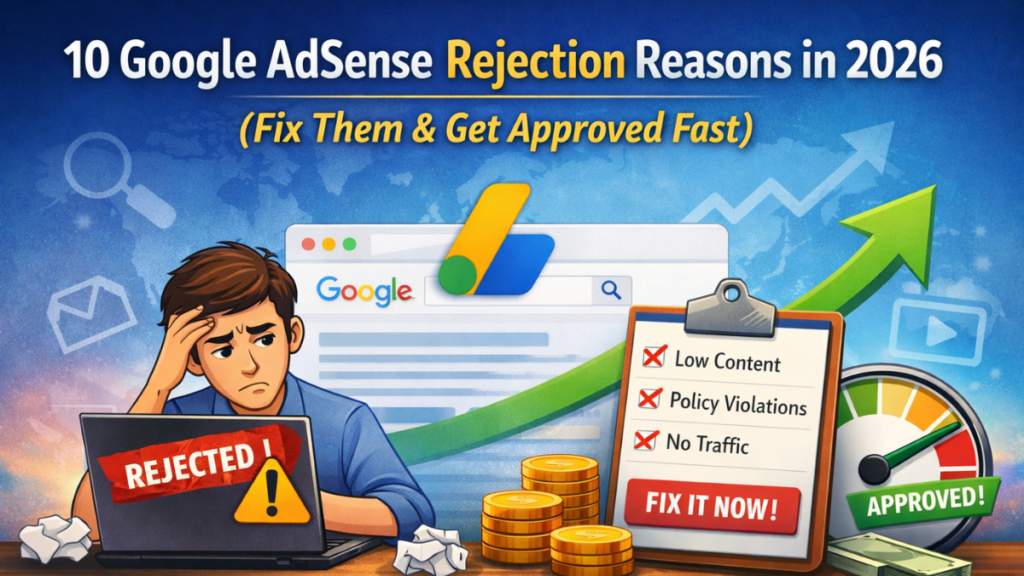
1. Low Value Content
Low value content is one of the most common reasons for AdSense rejection.
If your articles do not provide useful or original information, Google may consider them low quality.
Examples include:
- Very short blog posts
- Generic or repetitive content
- Automatically generated text without editing
To fix this, focus on publishing detailed and helpful articles that solve real problems for readers.
2. Insufficient Website Content
Many beginners apply for AdSense when their website has only a few articles.
Most successful websites have at least 10–15 high-quality blog posts before applying.
Each article should ideally contain 800 to 1500 words of useful information.
3. Missing Important Pages
Professional websites always include important legal and informational pages.
Without these pages, Google may consider the website incomplete.
- About Us
- Contact Us
- Privacy Policy
- Terms and Conditions
Adding these pages improves trust and increases your chances of approval.
4. Poor Website Design
User experience plays a major role in AdSense approval.
If your website has poor navigation or looks unprofessional, Google may reject it.
A good website should have:
- Mobile-friendly design
- Fast loading speed
- Simple navigation
- Clear content structure
5. Copyright or Copied Content
Google strictly rejects websites that publish copied content.
This includes:
- Copied blog articles
- Pirated images
- Scraped content from other websites
Always publish original content and use royalty-free images.
6. Thin Content Pages
Thin content means pages with very little information.
For example, a 200-word article without useful insights may not provide enough value.
Google prefers detailed and informative articles that fully answer a user’s question.
7. Low Quality AI Content
AI writing tools are widely used today, but unedited AI content can cause rejection.
Google expects content to be helpful, accurate, and written with human oversight.
Always edit and improve AI-generated content before publishing.
8. Policy Violations
Google AdSense has strict content policies.
Websites containing the following topics may be rejected:
- Adult content
- Illegal products
- Harmful or dangerous content
- Misleading information
9. No Organic Traffic
Although traffic is not mandatory, websites with zero visitors may struggle to get approval.
Google prefers websites that already receive some traffic from search engines.
Basic SEO optimization can help bring organic traffic.
10. Very New Website
Brand new websites sometimes get rejected because they appear incomplete.
It is usually better to publish content regularly for a few weeks before applying.
Approved vs Rejected Websites (Quick Comparison)
| Factor | Approved Websites | Rejected Websites |
|---|---|---|
| Content Quality | Detailed and helpful articles | Thin or copied content |
| Number of Blog Posts | 10–20 posts | 3–5 posts |
| Website Design | Professional and mobile friendly | Poor layout |
| Legal Pages | About, Contact, Privacy Policy | Missing pages |
| SEO Optimization | Optimized for search engines | No SEO structure |
Tips to Get Google AdSense Approval Faster
If your website was rejected before, you can improve your chances by following these tips:
- Publish at least 15 high-quality blog posts
- Write original and helpful content
- Add essential pages like About and Privacy Policy
- Improve website design and speed
- Follow Google AdSense program policies
Final Thoughts
Understanding why Google AdSense rejects websites is the first step toward fixing the problem.
Most rejections happen because websites apply too early or fail to provide valuable content for users.
By focusing on quality content, professional design, and SEO best practices, you can significantly increase your chances of getting AdSense approval.
Once approved, AdSense can become a powerful way to generate long-term income from your website traffic.